Ayurveda Amrita
Mulethi Powder (Licorice) for Pigmentation, Dark Spots & Acne
Mulethi Powder (Licorice) for Pigmentation, Dark Spots & Acne
पिकअप उपलब्धता लोड नहीं की जा सकी
Offers on this product
Delivery
Mulethi — licorice root — is the herb Ayurveda uses where the concern is dark spots and uneven tone. It is also one of the few traditional brightening ingredients that modern cosmetic chemistry agrees with, which is why licorice extract turns up in expensive serums.
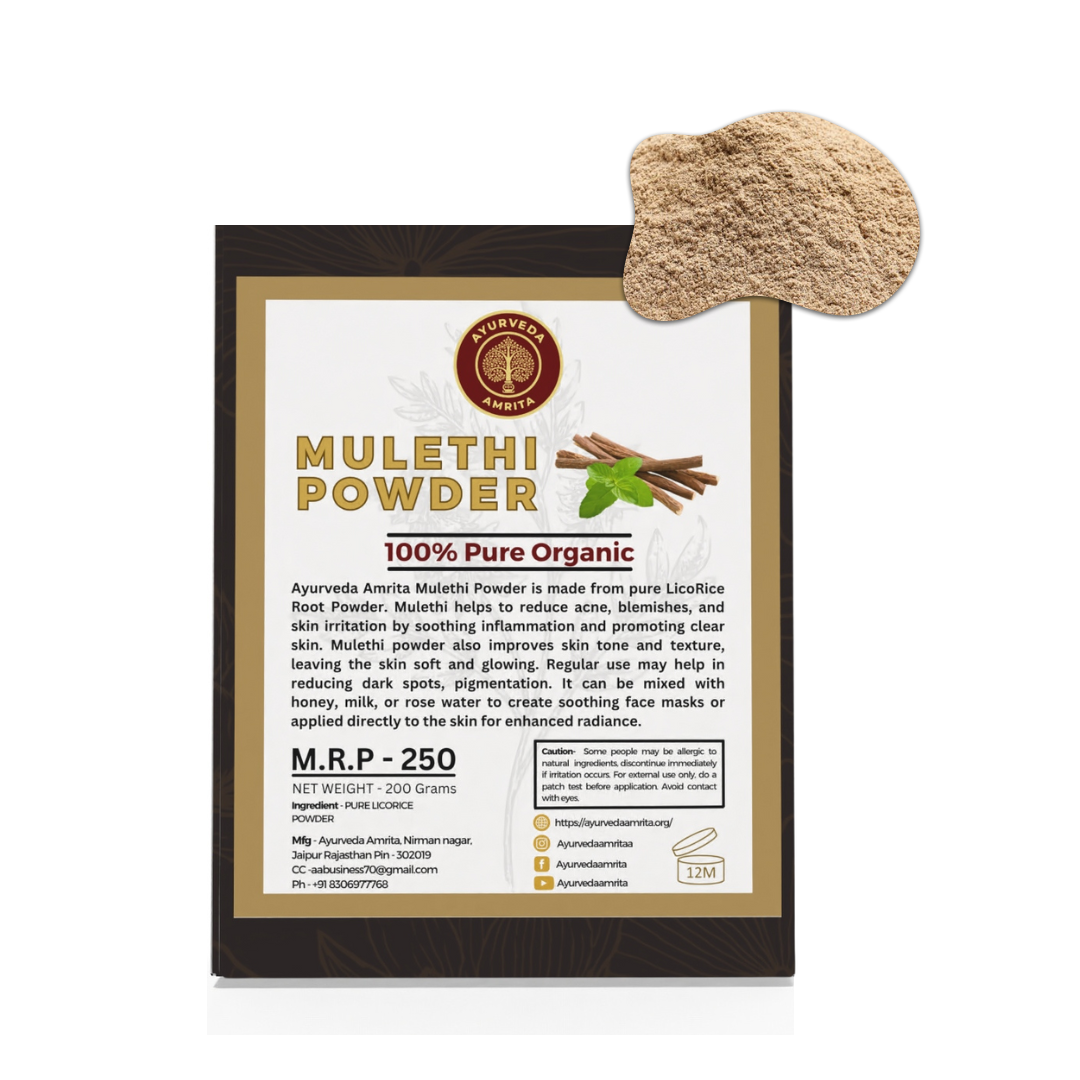
Ours is pure licorice root powder (Glycyrrhiza glabra), with nothing added.
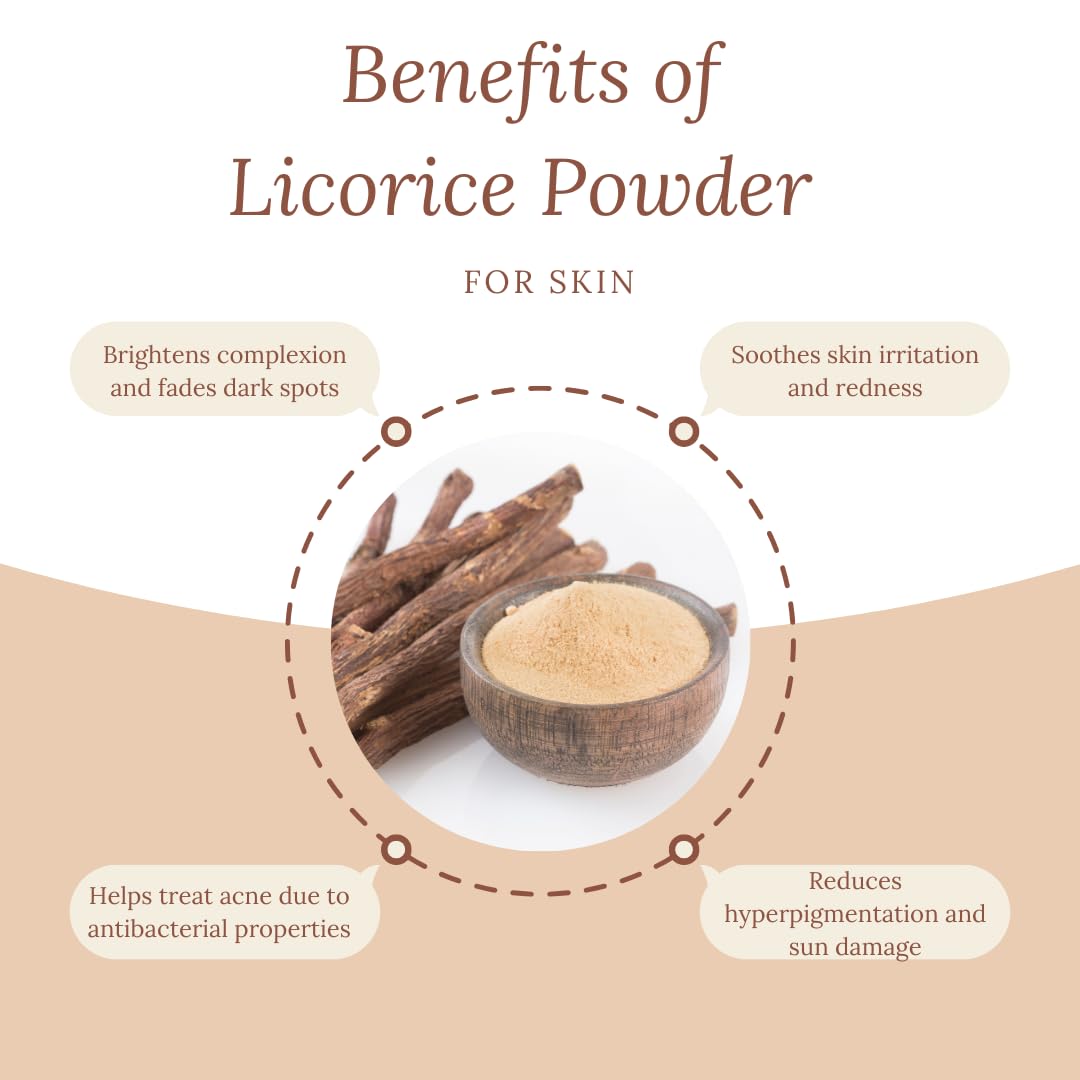
What It Does
- Fades dark spots and pigmentation. Its main use, and what licorice is best known for
- Evens out skin tone. Works on overall dullness as well as specific marks
- Calms acne and irritation. Anti-inflammatory, so it settles redness as well as the breakout
- Soothes sensitive skin. One of the gentler actives — it suits skin that reacts to most things
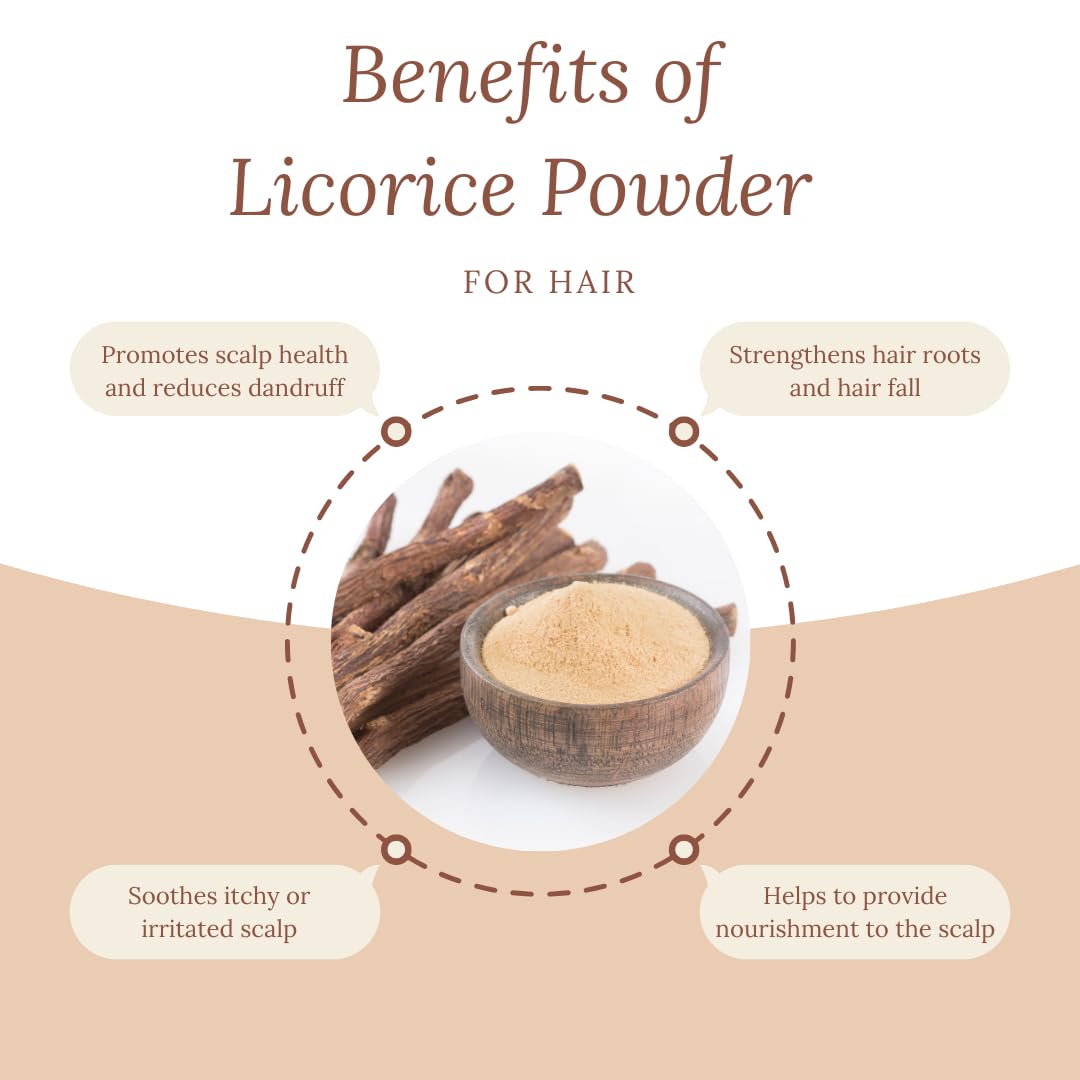
- Supports scalp health and helps with flaking when used in a hair mask
How to Use It
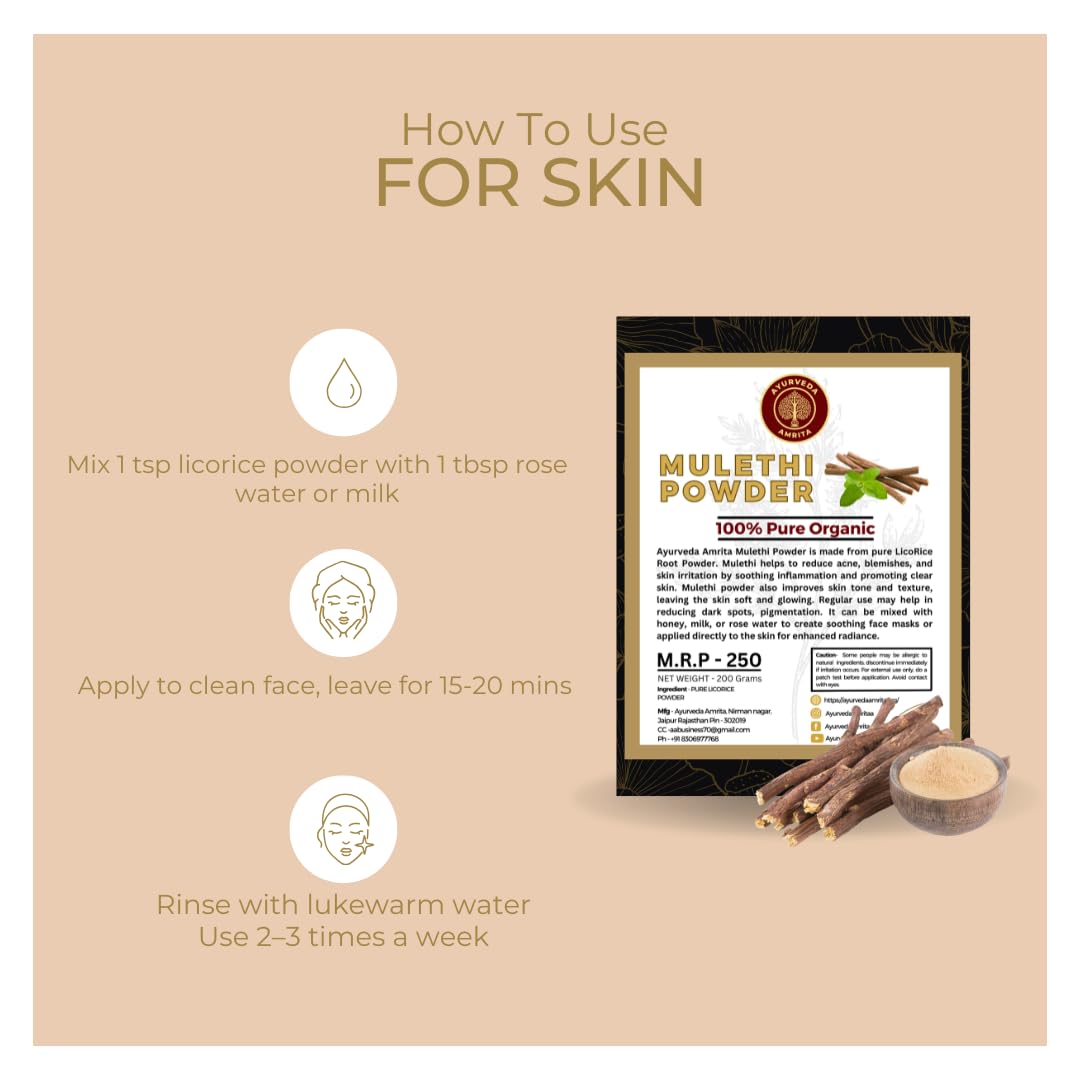
For dark spots and pigmentation
- 1 tsp mulethi powder
- 1 tsp rose water or milk
- ½ tsp honey
Apply to the whole face or to the marks. Leave 15–20 minutes, rinse with cool water. Three times a week.
For dullness and glow
- 1 tsp mulethi powder
- 1 tsp kaolin clay
- Rose water to mix
Leave 15 minutes. Twice a week.
For acne-prone skin
- 1 tsp mulethi powder
- ½ tsp neem powder
- Aloe vera gel to mix
Leave 15 minutes. Twice a week.
For sensitive or dry skin
1 teaspoon mixed with milk or aloe vera gel, left on for 10 minutes. Mulethi is mild enough that this is usually comfortable even on reactive skin.
For the scalp
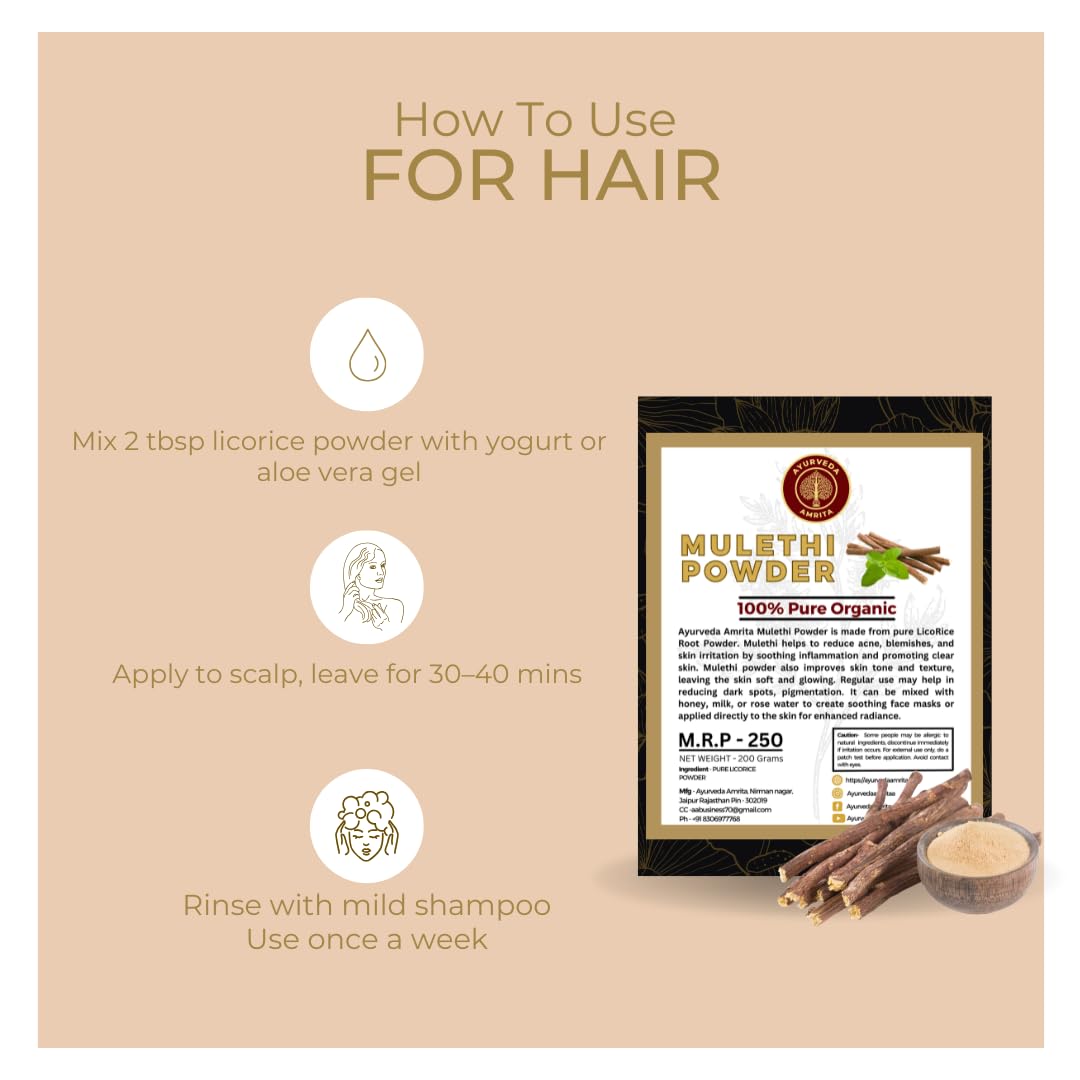
2 tablespoons in a hair mask with amla or methi powder, on the scalp for 30 minutes, once a week.
How Long Before Anything Changes
- 2 weeks: skin looks brighter and calmer
- 4–6 weeks: marks begin to look lighter
- 3 months: the realistic point to judge pigmentation
Pigmentation is slow with every ingredient, herbal or otherwise. Anything promising a week is not telling you the truth. Sun protection matters more than the pack — without it, marks come straight back.
Mulethi or Manjistha?
Both are used for skin, differently. Mulethi works on the surface — spots, tone, brightness — and is used as a pack. Manjistha is the internal herb, taken over months, and it is used as a pack as well. Many people use mulethi externally and manjistha internally.
How to Tell Good Mulethi Powder
- Pale yellow to light beige. Brown or grey powder suggests old stock or stem ground in
- Distinctly sweet smell and taste. Licorice is naturally sweet — that is the clearest marker
- Finely sifted, with no woody fibres
- Root only on the label
- Sealed pack with a manufacturing date
Frequently Asked Questions
Can I use it every day?
Two or three times a week as a pack. It is gentle, but no pack needs to be daily.
Will it lighten my skin?
It fades dark spots and evens out tone. It does not change your skin colour, and nothing herbal does.
Can I use it on sensitive skin?
Yes — it is one of the gentlest brightening ingredients there is. Mix it with milk or aloe rather than clay.
Can I use it under my eyes?
Carefully, mixed with aloe or milk, kept away from the lash line. For dark circles, cucumber gel is easier to use.
Is mulethi the same as licorice?
Yes. Mulethi is the Hindi name for licorice root.
Can I take it internally?
This is sold for external use on skin and hair.
Product Information
Ingredients: 100% pure licorice root powder (Glycyrrhiza glabra). No fillers, no colour, no fragrance.
For external use only. Patch test before first use. Avoid contact with eyes.
Storage: Airtight container, away from moisture. Use a dry spoon.
शेयर करना