

Ayurveda Amrita
Pure Shatavari Root Powder 100g
Pure Shatavari Root Powder 100g
पिकअप उपलब्धता लोड नहीं की जा सकी
If ashwagandha is the herb Ayurveda gives to men, shatavari is the one it gives to women. The name means "she who has a hundred husbands" — a blunt reference to what it was traditionally believed to support.
Ours is pure root powder of Asparagus racemosus, sifted fine, with nothing added.
What Shatavari Is
Shatavari is a climbing plant in the asparagus family. The medicinal part is the tuberous root, which is dug up, cleaned, dried and ground.
Like ashwagandha it is a rasayana, a restorative taken over time. Where ashwagandha is warming and stimulating, shatavari is cooling and nourishing. That difference is why the two are often taken together.
Traditional Uses
The women's tonic
Shatavari's main traditional use is as a general tonic for women across every stage of life — a herb taken steadily rather than for a specific complaint.
Cooling for the system
Classified as cooling in Ayurveda, which is why it is favoured in summer and for people who run hot.
Digestive comfort
The root is high in mucilage, the same slippery substance found in methi and gond katira. It is traditionally used to soothe the digestive tract.
Strength and nourishment
Used to build and maintain body tissue, in the same family of uses as ashwagandha but with a cooling rather than warming character.
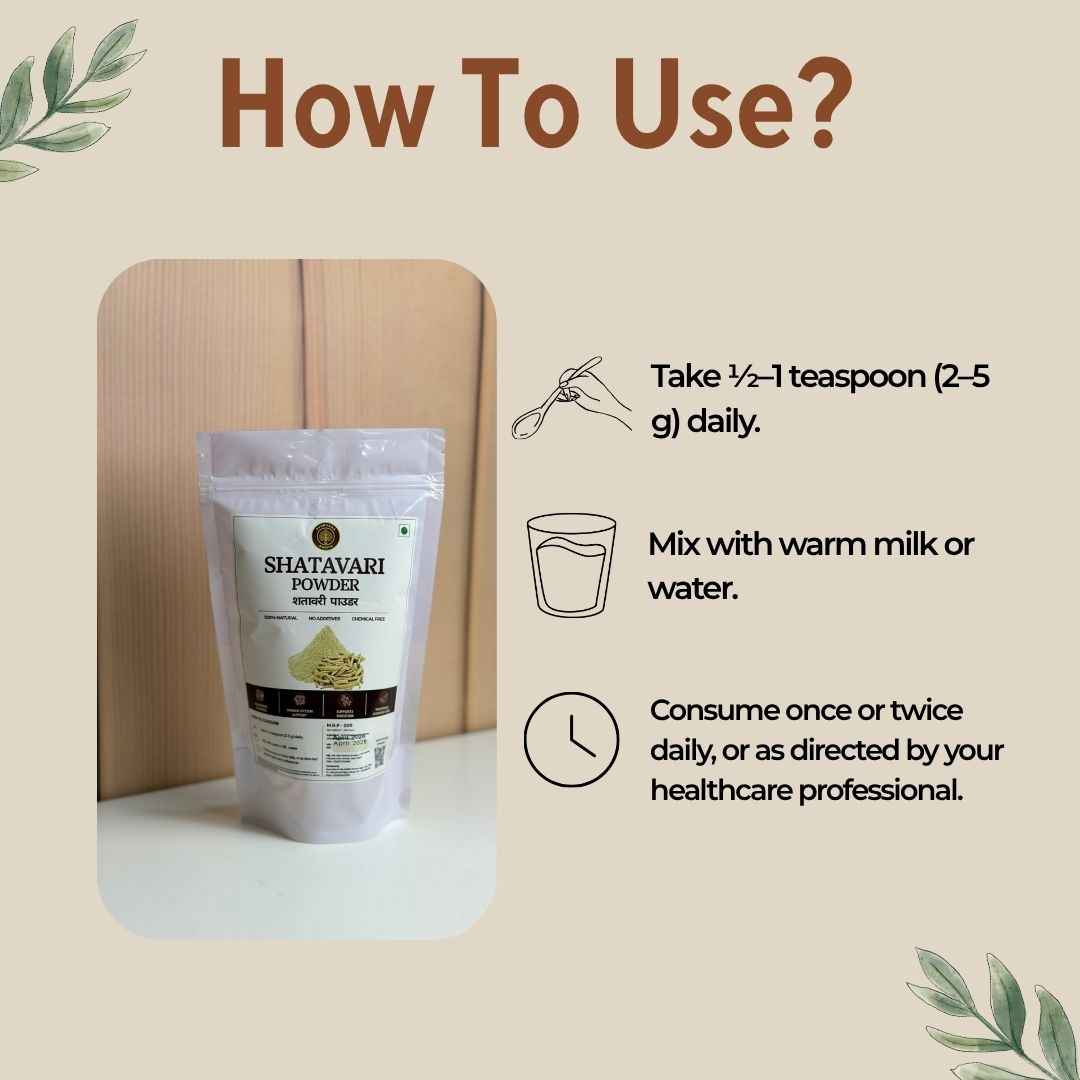
How to Take It
With warm milk — the traditional method
- Warm a cup of milk
- Stir in ½ to 1 teaspoon of shatavari powder
- Sweeten with honey, jaggery or mishri
- Take in the morning or at night
Milk is the classical carrier for shatavari and it is worth using if you can.
With warm water
½ teaspoon in warm water. Plainer, and fine if you avoid dairy.
With ghee
Mixed into a spoon of warm ghee with a little honey. A traditional preparation for nourishment.
Dosage
| Starting out | ½ teaspoon (about 1.5g) once a day |
|---|---|
| Regular use | 1 teaspoon (about 3g) a day |
| Best time | Morning or night, with milk |
| How long | 8-12 weeks. Shatavari is slow and cumulative |
Taking It With Ashwagandha
This is the most common pairing in Ayurveda and the two balance each other — ashwagandha warming and energising, shatavari cooling and nourishing.
The usual approach is ½ teaspoon of each in warm milk at night. Start with one herb for two weeks before adding the second, so you can tell what is doing what.
How to Tell Good Shatavari
- Off-white to pale cream. Grey or brown powder means old stock or stalk
- Faintly sweet smell, not musty
- Very fine and slightly sticky to the touch — that is the mucilage
- Root only, not "whole plant"
- Sealed pack with a manufacturing date
Who Should Be Careful
- Anyone allergic to asparagus
- Pregnant and breastfeeding women should take it only under qualified guidance
- Anyone on diuretics or blood sugar medication should speak to a doctor first
- People with a very sluggish digestion may find it heavy — take it with warm water rather than milk
Frequently Asked Questions
Is shatavari only for women?
No. It is best known as a women's tonic but is used for anyone who needs cooling and nourishing support, including men.
How long before I notice anything?
Eight to twelve weeks. It is slower than ashwagandha.
Milk or water?
Milk is traditional and thought to carry it better. Water works and is lighter.
Can I take it long term?
It is intended for long-term use. Many people take it for months at a stretch.
Powder or whole root?
Powder is easier. Whole root keeps longer and lets you check quality yourself.
Does it taste bad?
Much milder than ashwagandha. Slightly sweet and starchy.
This is a food product, not a medicine. It is not intended to diagnose, treat, cure or prevent any disease. Consult a qualified doctor before starting any supplement, particularly if you are pregnant, breastfeeding, or taking prescription medication.
शेयर करना