

Ayurveda Amrita
Pure Safed Musli Powder 100g — White Musli Root
Pure Safed Musli Powder 100g — White Musli Root
पिकअप उपलब्धता लोड नहीं की जा सकी
Safed musli is one of the more expensive Ayurvedic roots, which is exactly why so much of what sells cheaply is something else entirely.
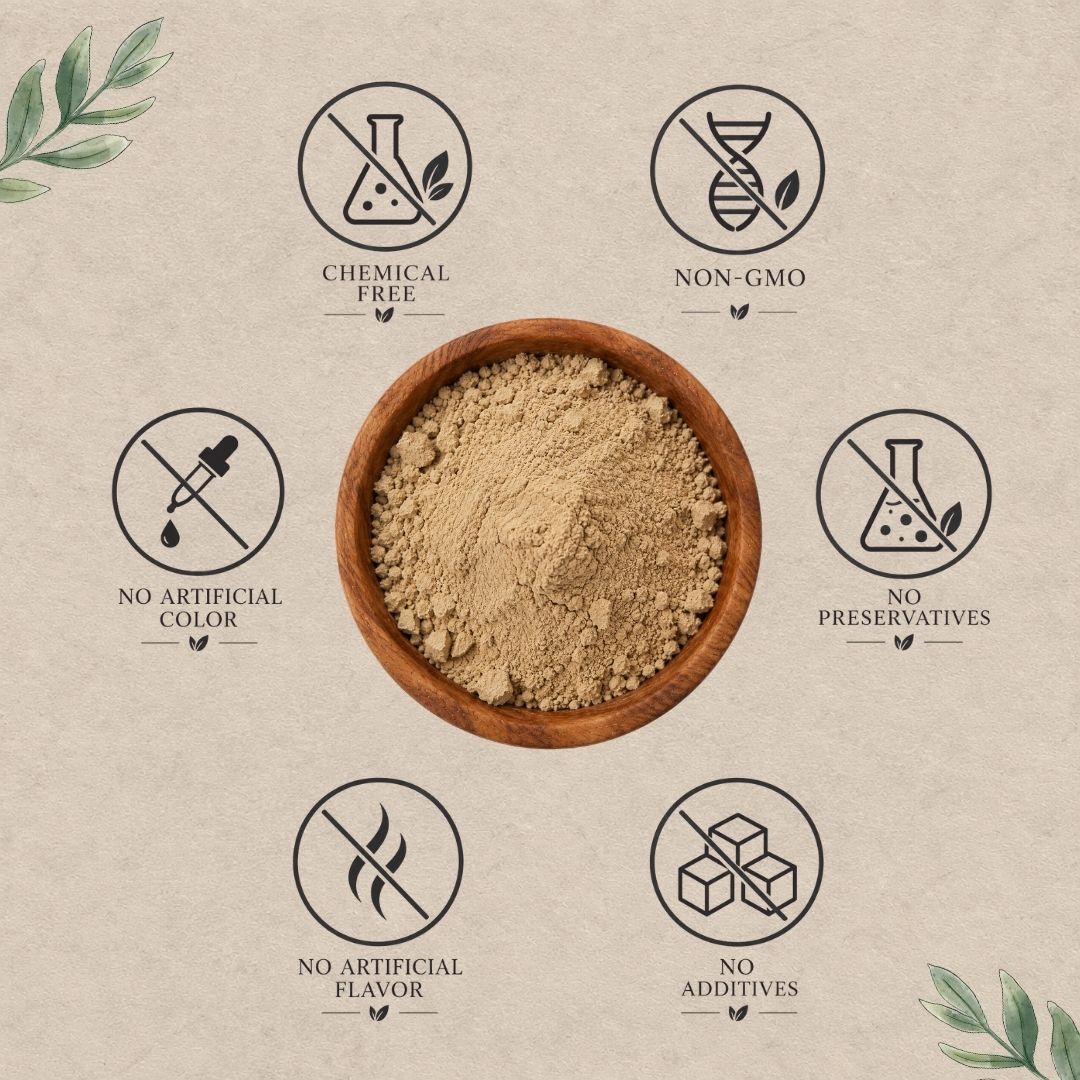
Ours is pure root powder of Chlorophytum borivilianum, with nothing added.
What Safed Musli Is
Safed musli is a small herb with a cluster of fleshy white tuberous roots. Those roots are dug, peeled, dried and ground. The peeling step is part of why it costs what it does — it is slow, manual work.
The plant is genuinely scarce in the wild and most commercial supply now comes from cultivation.
Traditional Uses
Strength and vitality
Safed musli's primary classification in Ayurveda is as a vajikarana herb — a category concerned with vitality and physical strength. This is its main traditional use and the reason it has always been costly.
Building the body
Traditionally given to help build body weight and muscle, particularly for people who struggle to gain.
Stamina
Used to support endurance, often taken alongside ashwagandha.
General restoration
Classed as a rasayana, taken over months as a restorative.
How to Take It
With warm milk — the traditional method
- Warm a cup of milk
- Stir in ½ to 1 teaspoon of safed musli powder
- Sweeten with honey, jaggery or mishri
- Take at night, or in the morning
Milk is the classical carrier and is considered to carry musli better than water.
With ghee and honey
½ teaspoon mixed into warm ghee with honey. A traditional preparation for building strength.
With warm water
Works, and is the option if you avoid dairy, though milk is preferred.
Dosage
| Starting out | ½ teaspoon (about 1.5g) once a day |
|---|---|
| Regular use | 1 teaspoon (about 3g) a day |
| Best time | Night with warm milk |
| How long | 8-12 weeks |
Why Cheap Safed Musli Is Usually Not Safed Musli
Genuine safed musli root is expensive to grow, slow to peel and scarce. Powder selling far below the market rate is almost always one of three things: a different and cheaper musli species, root that was never peeled, or starch and filler bulking out a small quantity of the real thing.
If the price looks too good, that is the information.
How to Tell Good Safed Musli
- Off-white to pale cream, hence the name safed. Brown or grey means unpeeled root or adulteration
- Very fine and starchy to the touch
- Mild, slightly sweet taste. Strongly bitter musli is a different species
- Faint, clean smell
- Root only on the label
Who Should Be Careful
- Pregnant and breastfeeding women
- Anyone with very sluggish digestion — musli is heavy, so take it with warm water rather than milk
- Anyone on medication should speak to a doctor first
Frequently Asked Questions
Why is it so much more expensive than other powders?
The root is scarce, slow to cultivate and has to be peeled by hand before drying. That cost is real and unavoidable.
Milk or water?
Milk. It is the classical carrier for musli and makes a genuine difference to how it is traditionally used.
Can I take it with ashwagandha?
Yes, and it is a common pairing. Half a teaspoon of each in warm milk.
How long before anything happens?
Eight to twelve weeks. Musli is cumulative.
Is safed musli the same as kali musli?
No. Kali musli is a different plant, cheaper, and sometimes sold in place of safed musli.
FSSAI Licence No.: 22226112000739
This is a food product, not a medicine. It is not intended to diagnose, treat, cure or prevent any disease. Consult a qualified doctor before starting any supplement, particularly if you are pregnant, breastfeeding, or taking prescription medication.
शेयर करना